
A good place to start your quest for sustainable living is transportation. There are a variety of ways to get from A to B, and depending on where you live and where you need to go, it can be very difficult or very simple, environmentally friendly or deadly. Below are some options to consider for your commute. Your choice between these options may be dependent on distance, surrounding infrastructure, climate, and your situation.
PUBLIC TRANSPORTATION:

I am a huge advocate for public transit. Public transit reduces traffic congestion and air pollution by taking cars off the road. Along with favorable fares contributing to the funding and development of a much needed public service, public transit is excellent if appropriate to your circumstances. Based on my experiences with public transit in San Francisco, Denver, Boston, New York, Philadelphia, and abroad, I have realized that travelling with the rest of the city gives you a real feel for wherever you are in the world. Take public transit to get a taste of the community and culture that surrounds you.
BICYCLE:
 If the commute isn’t too rigorous or dangerous, then try biking to work. Your environmental and economic cost will be even less than using public transit, and you’ll get a great exercise to start and finish your day. Living in Boulder, Colorado, my bike commute was much easier and quicker than a car commute, as Colorado values sustainable transportation. If there isn’t a proper infrastructure in place to facilitate commuting by cycling, then it isn’t worth the risk.
SCOOTER:
 If you’d like to bike to work but need a little help to get there, then you should consider purchasing a scooter on Craigslist. A great middle ground between a bicycle and a car, scooters are fuel efficient, environmentally friendly, and can easily match your commute by car (depending on your situation). They’re modestly priced and easy to operate, park, and obtain, as most states do not require registration or a motorcycle license for any scooter with a motor smaller than 50cc. Beware of steep hills and speed limits higher than 25 miles per hour.
CAR:
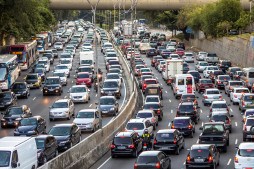 There is not a scenario more environmentally inconsiderate than a single passenger having to drive a car to work. It’s the easiest, most convenient option, and depending on your vehicle, it’s probably as environmentally taxing as I declare. But anything is better than starting and ending your day in rush hour traffic. If it’s sensible to consider any of the previous alternatives, then you should. If you live 20-30 minutes from work and the freeway is the only way to get there, then this is your only option. However, please consider carpooling with a family member or co-worker, as this can help reduce car emissions.
FINAL THOUGHTS:
In evaluating these modes of transportation relative to your own situation, know that every decision you make towards a more sustainable form of transportation makes a difference. I live in East Knoxville, play in downtown Knoxville, and work in South Knoxville. Taking public transit isn’t very reasonable for me and depends on two different buses that run on two different schedules. My road bike or scooter route is safe and reasonable, unless there’s foul weather, and takes nearly the same amount of time as commuting by car.
Think about where you live and where you go in relation to your home base, and ask yourself whether there’s a more sustainable way to get there and back.

Ben DiFilippo
Guest Blogger
 Green Village Green Blog
Note from Carol:
Ben, great information. You can blog for us anytime! Personally, I have no access to public transportation, I usually travel 15 or 20 miles in various directions, and the roads have no bike lanes around me – so I have leased an electric Smart Car. I’m still learning it so I’ll blog about it another time.
LikeLike